CASA DAS CANOAS
- Oscar Niemeyer
Estrada da Canoa, 1246 - São Conrado, Rio de Janeiro, Brazil
Oscar Niemeyer designed Casa das Canoas in 1951 as a family home for himself, his wife, and their daughter Ana Maria. Built on a hillside in São Conrado overlooking Guanabara Bay, the house exemplifies his signature style of curves, sensuality, and harmony with nature. It remains one of the most significant examples of modern Brazilian architecture.
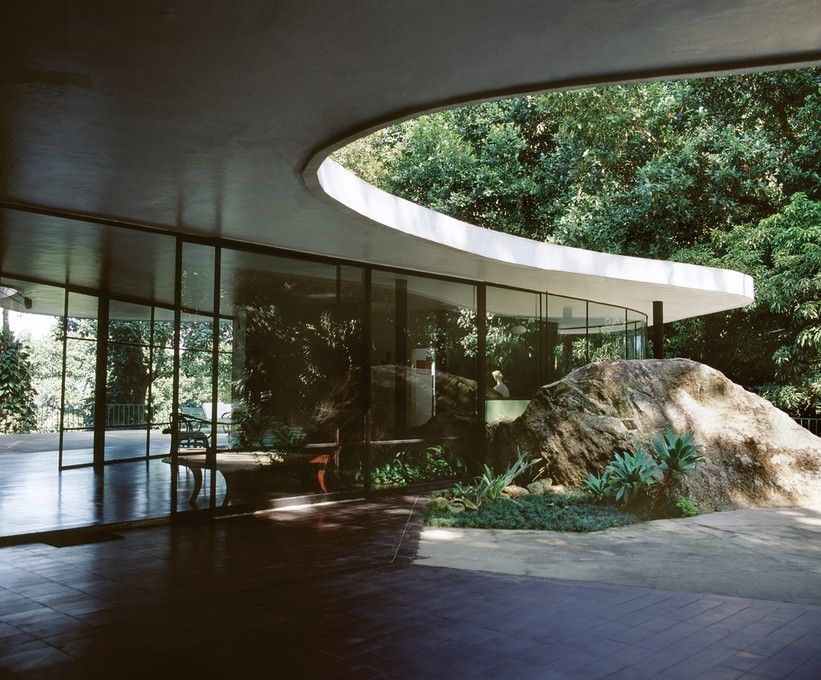
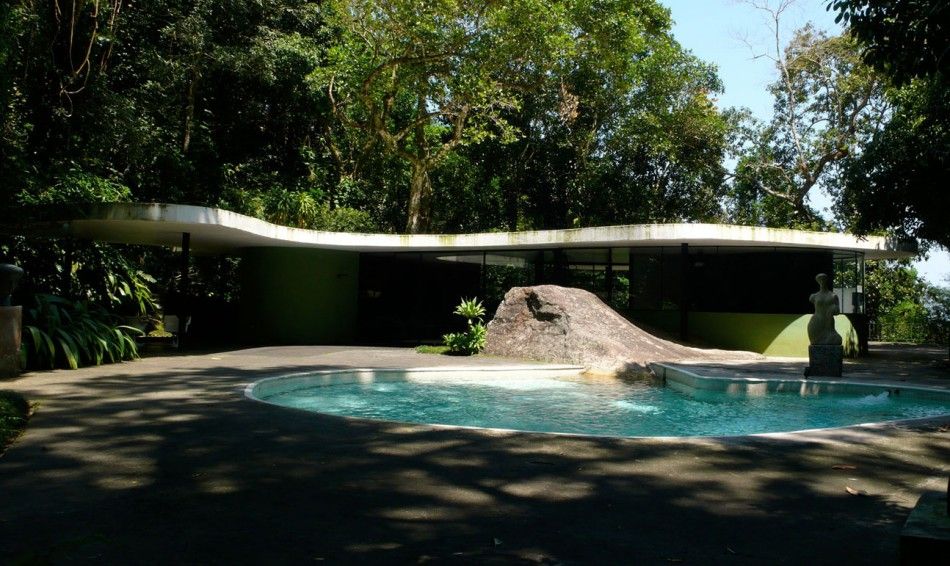
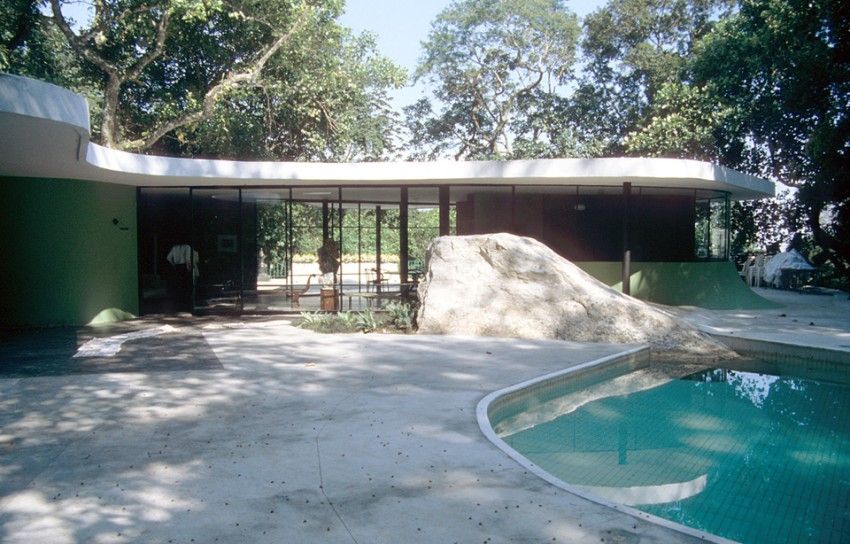
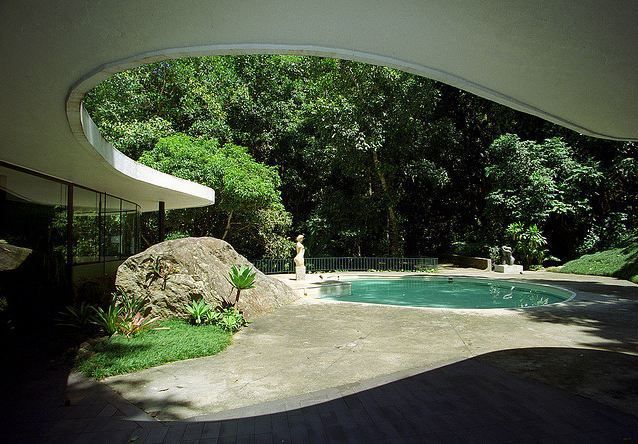
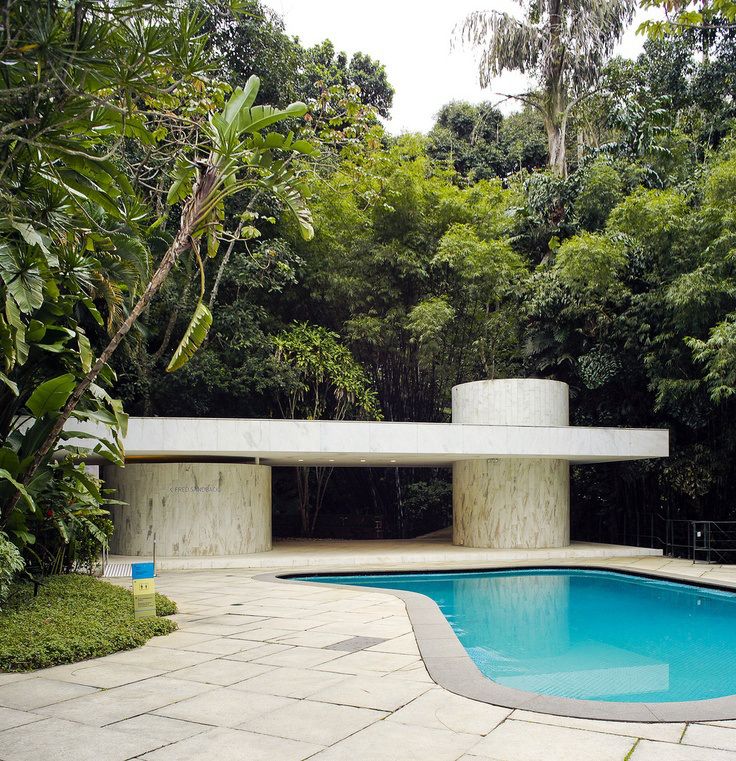
The house was Niemeyer's third residence. He had built his first home in 1942 on a hillside facing Rodrigo de Freitas lagoon, then adapted a rural structure near Mendes for weekend retreats in 1949. He used the uneven terrain to create a platform that extends beyond the structure's boundaries, supporting a pavilion containing the living areas, dining room, and kitchen on the upper level, with private bedrooms below.
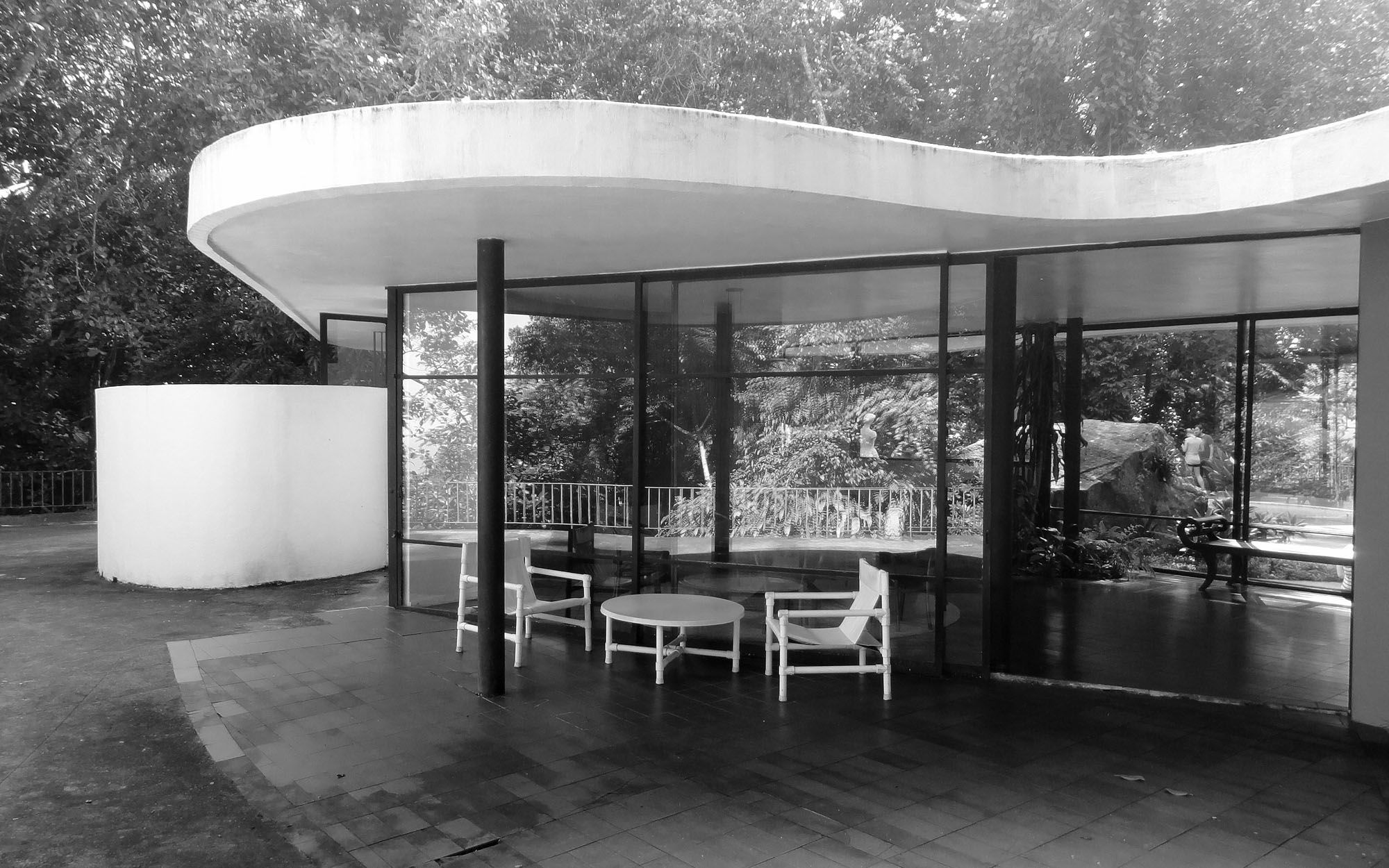
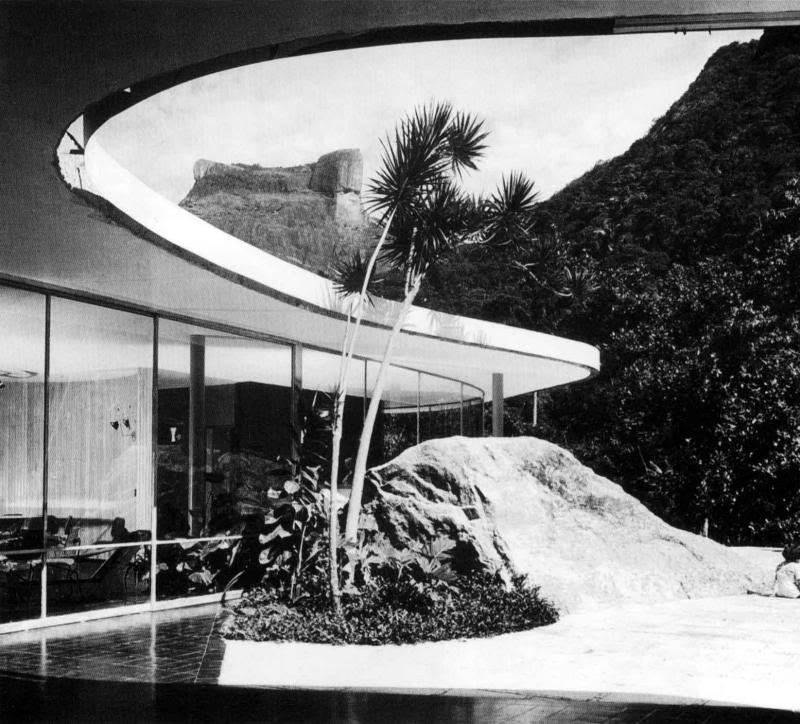
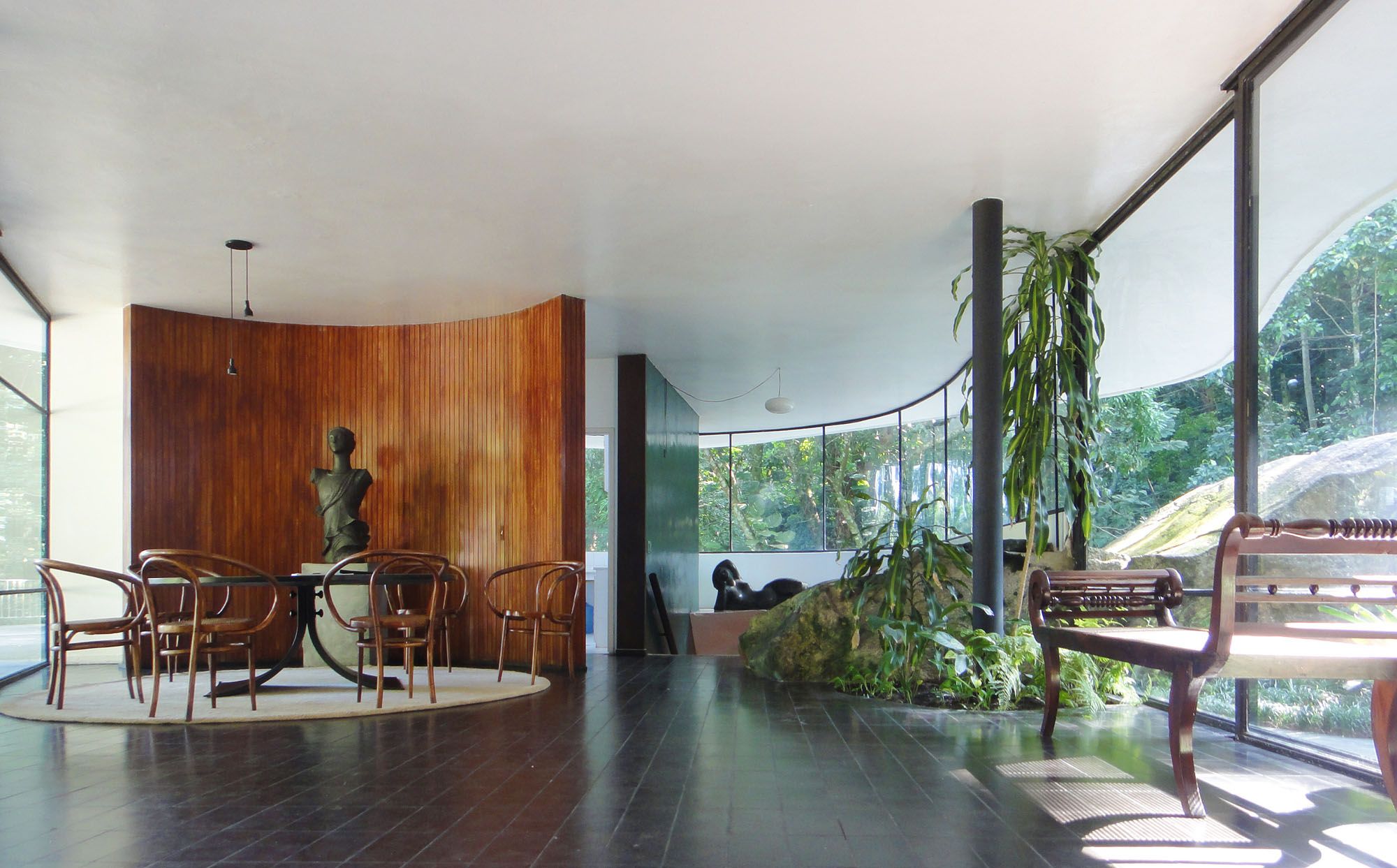
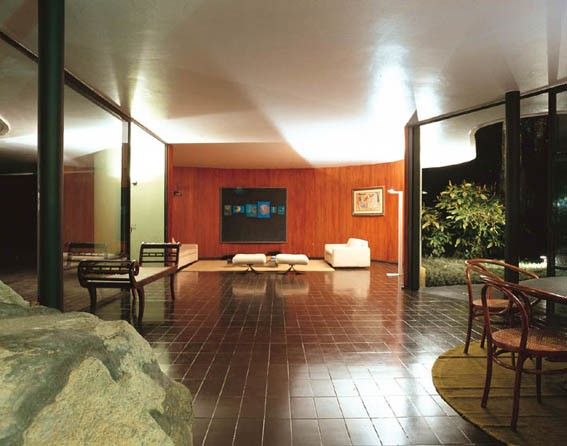
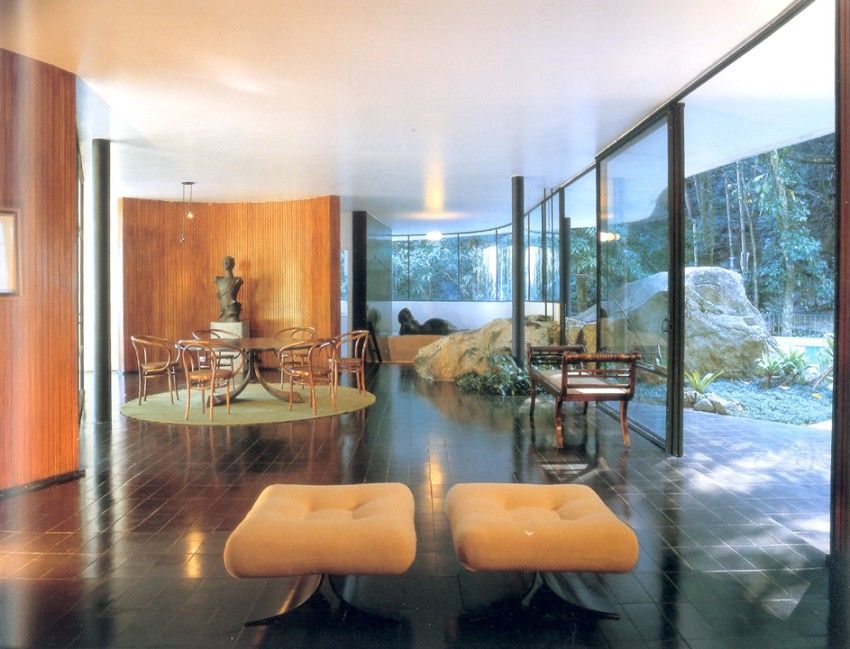
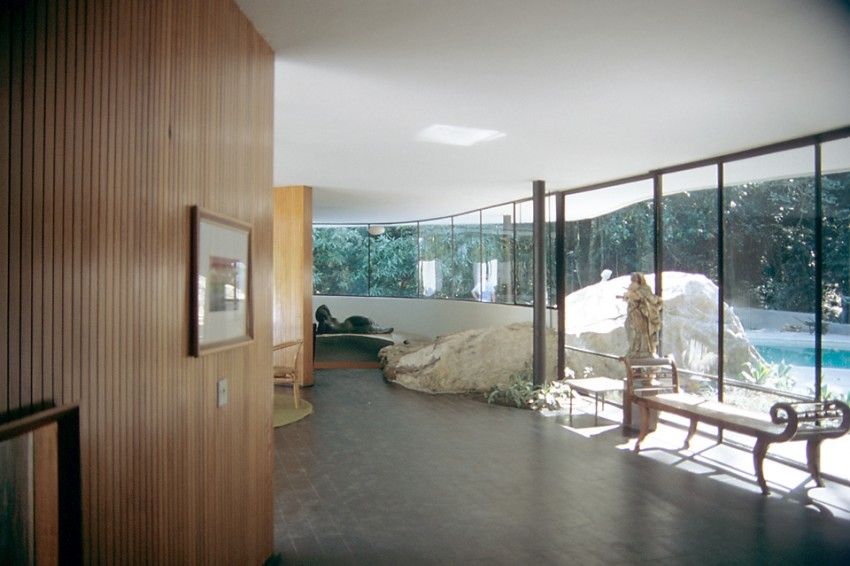
The design showcases Niemeyer's genius for blending architecture with landscape. A large boulder from the hillside enters through the glass walls into the living room, serving as a sculptural element and anchoring the interior stairs that connect both floors. The curved flat roof, supported by steel columns, seems to float above transparent glass walls that dissolve the boundary between inside and outside. The pool wraps around another massive stone, while sculptures by his friend Alfredo Ceschiatti are placed throughout the property.
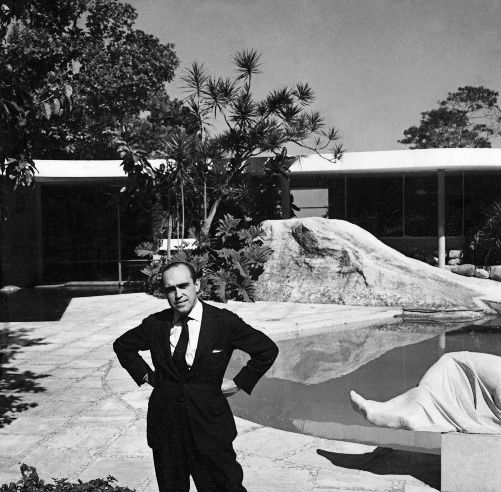
Niemeyer and Ana Maria designed the interior together. The private spaces contrast with the open living areas, featuring small windows that offer views of the vegetation outside, creating intimacy within the larger openness.
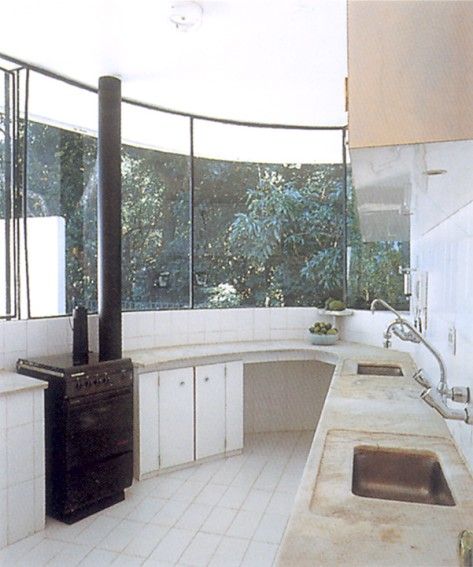
The family lived here until 1965, when Niemeyer was forced to leave Brazil due to the military dictatorship. After moving to a flat in Ipanema, a devastating landslide damaged parts of the property. The house is now open to the public and maintained by the Oscar Niemeyer Foundation, offering visitors a permanent exhibition on the architect's work. Located at Estrada das Canoas 2310, it serves as headquarters for the foundation and stands as a testament to Niemeyer's philosophy that architecture should celebrate both human creativity and the natural world.